Search This Blog

Thursday, April 25, 2013

Pesto: A Midsummer Night's Dream

Inspired.

Michael's basil seedlings have poked through their sleepy peat pot cocoons and unfurled their delicate tender leaves. As they bend toward the morning sun, they inspire dreams of  midsummer caprese salads and  genovese  pestos. While we're weeks away from the sweltering dog days of summer and the height of basil season, a variety of vibrant pestos can be prepared from the gorgeous spring greens that dot the stands of our farmer's market.


Unexpected.

Wednesday, April 17, 2013

Market Days

Tulips, daffodils, horse racing, and strong mint julips are sure signs that spring has sprung here in Lexington.  For food lovers, locavores, or anyone who respects the  integrity of locally grown food, spring really begins when the farmers' market moves outside for opening day. After a long winter, the Lexington Farmers' Market ditched its indoor digs and set up shop this past weekend under the Pavilion in Cheapside Park. Although I hit the market early on opening day, it was bustling. Warmed by the sun beaming down through a brilliant cloudless sky, everyone embraced the serene energy and vibe that reverberated throughout the market. While people meandered around, a lone violinist quietly serenaded the morning crowd. Market Days. Let the games begin.

Without a plan, I hit the ground running.. Typically, pickings are slim on opening day. Not this year. Although I've grown accustomed to the usual early season out-of-state offerings, I was blown away by wonderfully fun local surprises. After eating my way through a wide variety of cheeses (chevre, beer, and cheddar),  I wandered up the side street of the market. Chilled by the dimmed shade of the old courthouse, I was quite taken with baskets of delicate micro greens, watercress, and pea shoots from Hoot Owl Holler Farm in Boyle County.  In all of my market days, I can't recall ever running across micro anything. Sold.

On my way to the car, I stopped by the Blue Moon Farm stand for a bite of garlic scape pesto. Why not? Cheese and pesto.  Breakfast of champions. My non plan changed completely when I spotted fresh feathery Bracken County shitake mushrooms nestled between tied bunches of young green garlic bulbs. Game on.

Chicken Marsala might seem a bit old fashioned and old school, but the combination of sauteed crisp chicken breasts, sweet fortified marsala wine, stock, white button mushrooms, onions, and garlic is downright delicious.

Chicken Marsala.
After using a damp kitchen towel to clean the shitake mushrooms, I snipped the tough stems from the caps, sliced the large mushrooms into thin strips, left the smaller ones whole, and set them aside.

I pounded two small boneless chicken breasts into very thin cutlets (1/4 inch thick). After seasoning the cutlets with salt and pepper, I melted 2 tablespoons of butter in a cast iron skillet over a medium flame.  When the butter sizzled, I dredged the chicken pieces through sifted flour and pan fried them until they were golden brown. I removed the chicken cutlets to a side plate, tented them, and let them rest.

While the skillet was still hot, I added two tablespoons of butter and a thinly sliced shallot. I sauteed the shallot threads until they wilted into the butter, tossed in minced garlic, cranked the heat to medium high, tumbled the mushrooms into the skillet, and let them rip undisturbed for 10 minutes. Just before the mushrooms started to caramelize, I showered them with kosher salt and fresh parsley. After the salt seared into the their soft flesh, I deglazed the pan with 1 cup of Lombardo Fine I.P. ambra sweet marsala wine, reduced it to a glaze, added 1/2 cup chicken stock, and slid the crisp chicken cutlets into the sauce to warm through.

After boiling 1/2 pound of linguini in heavily salted water until al dente, I twirled the pasta into large bowls, nestled the chicken cutlets on top of the pasta, and spooned the shitake mushroom marsala sauce over the chicken. To brighten the sleepy sauce, I finished with tender pea shoots lightly tossed in olive oil and fresh lemon juice.

The mushroom marsala wine reduction spilled over the crisp buttery chicken, bathing it in the aromatic sauce. Perfect. Savory and sweet. Classic marsala.

While the tender glazed chicken alone could have sealed the deal, it was all about the fresh shitake mushrooms. Instead of collapsing or melting away, the succulent meaty sponges absorbed the sultry sauce, plumped, remained robust, and popped with earthy marsala wine-infused mushroom jus.

Complex.
Intense.
Fabulous.

Saturday, April 6, 2013

Pot Of Gold

You can't rush pot likker. It takes time to coax the porky, peppery, and vinegary flavor from a mess of greens simmered long and slow in a highly seasoned ham hock stock. It's worth the time when you finish with a huge pot of southern comfort. Sure, the  greens turn out great, but the likker is liquid gold.

We still have a couple of weeks before the perky spring vegetables  hit the stands at the farmers' market. Right now, we're in the 'between' time. The market cusp. I impatiently await the arrival of the pretty stuff. In the between time, I made do with a preseason spin on sleepy southern greens.

Ham Hock Stock.
The Base.
I probably made too much stock, but I wanted enough pot likker to soothe my soul. I sauteed two cups of diced onions in bacon fat.  When the onions caramelized in the salty fat, I added 2 minced garlic cloves, cracked black pepper, garlic powder, onion powder, red pepper flakes, sugar, and seasoned salt. Just before the garlic browned, I deglazed the pot with 3 cups chicken stock and 2 cups water. I tossed a large smoked ham hock into the bath, brought the stock to a boil, reduced it to a simmer, cover the pot, and let it simmer for an hour. In a moment of high falootin' weakness, I added a tiny pinch of saffron to the stock. I couldn't help myself. Sorry, Granny.


Greens.
While the stock simmered, I thoroughly washed 2 pounds of collard, mustard, and turnip greens. After chopping them into bite sized pieces,  I nudged the greens into the simmering stock and added 4 tablespoons
of apple cider vinegar.  When the greens wilted into the ham hock stock, I covered the pot and simmered the greens for a ridiculous 2 1/2 hours. Our house smelled like a roadside diner. Honest cooking. No pretense (sans the saffron).

Confession. While the greens simmered into oblivion, I repeatedly used a turkey baster to drink taste the stock. Suck. Cool. Squirt. Repeat. Elixir. Fabulous. To preserve my precious pot likker, I replaced my baster blasts with an additional 2 cups chicken stock.  After the first hour, I pulled the ham hock from the pot and shredded the tender meat before returning it to the simmering greens.

It's virtually impossible to mess up a mess of greens. They simply happen.

After a few hours on the stove top,  I  ladled the not-so-pretty murky greens and pot likker into large pasta bowls. We typically eat our greens topped with chopped hard boiled eggs and peppered vinegar. I changed it up a bit by slipping wedges of heavily buttered cornbread into the seasoned likker before scattering quick-pickled julienned carrots over the greens and nestling soft boiled eggs to the side.

Packed with contrasting textures and flavors, there was a lot going on for ordinary southern greens.
While the oozing egg yolks enriched the spiced stock, the  pickled carrots popped through the sleepy greens with crisp biting zing.  By the time the cornbread dissolved into the twangy mess, the greens were gone. Only the pot likker remained.

I tipped the enormous bowl to my mouth and drank every last drop.

Liquid gold.
Enough said.


Thursday, March 28, 2013

Wine And Cheese

After slopping around knee deep in pureed chicken livers, sauteed black pudding blood sausages, and braised bony chicken feet for a whacked  charcuterie table at work, I was covered in gelatinous goo. When the guts settled and the evening was over, I started planning the next event.

I knew the food needed to be a bit tamer. Something calmer. Something normal.  Wine and cheese seemed like a safe route, so I played around and experimented with different takes on simple combinations of wine and cheese. Game on.

Wine.

Cracked Black Pepper White Wine Jelly.
A simple straight forward jelly with attitude.  Few ingredients. Big payoff.  With slight citrus undertones, I used an affordable Elk Creek Vineyards off-dry chardonnay for the base of the jelly. I brought 2 cups of the chardonnay
to a rolling boil in a heavy cast iron skillet before adding 3 1/2 cups sugar. I let it rip for 4 minutes (until the sugar dissolved into the wine), pulled it from the heat, and added 2 3oz pouches of liquid pectin along with 1/2 cup cracked Tellicherry peppercorns.

After ladling the pepper jelly into sterilized jars, I wiped the rims, sealed the lids, and processed them in a water bath for 10 minutes before carefully removing them to cool on soft kitchen towels.  When the jars came to room temperature, I
slid them into the refrigerator to help the jelly set up and congeal.


Cheese.

Gorgonzola Pecan Crackers.
Slightly pungent gorgonzola is typically paired with robust red wines or sweet white dessert wines. With that in mind, I knew the inherent sweetness of the spiced jelly would balance the soft saltiness of the gorgonzola. There are a gazzilion recipes for cheese crackers/wafers/cookies. Although they're not difficult to throw together, they can be finicky and tricky to pull off.  Recently, Michael surprised me with a copy of the Lee Bros. Charleston Kitchen cookbook. Because cheddar cheese wafers/crackers are iconic in Charleston, they included a version of their own.  I used their method, replacing the cheddar cheese with gorgonzole dolce cheese.

I crumbled 4 oz of gorgonzola dolce (the milder, younger version of gorgonzola piccante) into a stand mixer and added 1/2 stick of softened unsalted butter. After creaming them together for 3 minutes, I added 3/4 cups sifted all purpose flour, a pinch of salt, and 1/2 teaspoons red pepper flakes.  When the dough pulled away from the sides of the mixer, I formed into a 9 "x 2 " log and rolled it over roughly chopped pecans.  After pressing the nuts into the softened cheese, I wrapped the log in plastic wrap and slid it into the refrigerator to chill.

Twisted Wine and Cheese.

Snacks.
After preheating the oven to 350 degrees, I sliced the hardened gorgonzola cheese log into 1/4 inch rounds, lined them up on  a Sil Pat, and baked them until they were golden brown, about 24 minutes. I didn't leave the kitchen. I burn things. A lot.

While they were still somewhat warm, I stacked the crackers on a pink Himalayan salt block, dolloped a few with the cracked black pepper wine jelly, and served them with thinly sliced Anjou pears.

Here's the deal. They were fantastic. The combination was wonderfully strange. The crackers snapped under the oozing sweet jelly. While the crisp fresh pears added cleansing wetness, the peppercorns popped with biting heat, brightening the muted pungency of the crunchy gorgonzola cheese crackers.


Sticky fun.


Saturday, March 9, 2013

Bread And Water

It's funny how a hankering can spin on a dime and change completely. I had a hankering to bake bread. That notion left me with the hankering to make something to sop up with bread.

Irish Lamb Stew with Brown Soda Bread.
There are many thoughts and culinary theories behind Irish Lamb Stew. Traditions, methods, and riffs run the gamut. Traditionally, it's made with mutton, mutton neck bones,or gigelots flavored with  potatoes, onions, water/stock, and parsley. Sometimes carrots, turnips, parsnips, or leeks are added. The variations are endless.

I wanted something simple and pure. The true essence of Irish Stew is more about method than madness.

I made a quick early morning run to the Indoor Farmers' Market and picked up a gorgeous slab of meaty lamb ribs from Elmwood Stock Farm. With plenty of meat to bone ratio, I knew the lamb ribs would add deeper layers of flavor to the stew.

Traditionally, nothing in the stew is browned. Ingredients are layered, seasoned, bathed with water or stock, and allowed to simmer for a few hours. Simple.

After trimming most of the outer fat pockets from the rib slab, I split the ribs into individual pieces. I broke a little from tradition and briefly browned the ribs to render additional fat. I peeled 6 medium  russet potatoes, 4 large carrots, and three parsnips. I thinly sliced 3 of the potatoes, chopped the remaining potatoes into large wedges, diced 1 large onion, and sliced the carrots and parsnips into oblong pieces.

Layers.
After wiping out the dutch oven I used to brown the ribs, I placed the thinly sliced potatoes on the bottom to allow them to break down during the cooking process and help thicken the stew. I tumbled the onions over the potatoes, added the carrots and parsnips, and wedged the lamb ribs over the vegetables. I seasoned each layer with salt, cracked black pepper, and fresh thyme from my snowy deck. I ladled 4 cups of simmering chicken stock into the dutch oven (to just cover the lamb) and placed the remaining potato wedges on top of the lamb to steam as the stew braised.

I covered the stew with parchment paper, clamped the heavy lid into place, slid it into a 350 degree oven, and let it rip for 3 hours.  After 1 1/2 hours, I pulled the meat from the bones, tucked it into the vegetables, discarded the stripped bones, and tossed the stew back into the oven.

Brown Soda Bread.
Possibly,  the easiest bread on the planet. Rustic and simple. I sifted 1 teaspoon baking soda and 1 teaspoon salt with 4 cups (2 cups each) Wiesenberger Mill whole wheat and unbleached white flour.  After adding 1 1/2 cups buttermilk, I gently kneaded the dough 8 times, formed it into flat ball, carefully placed it into a large cast iron skillet, sliced a cross across the top, and slid it into the oven to bake alongside the stew. (about 45 minutes, until browned).

After 2 hours, the stew needed more liquid. Dilemma. I had my usual bag of tricks. I wanted to add Guiness or red wine. Big flavor with little effort. That's typically how I role. Did I really want to muck it up? Nope. I kept it simple and added water. Water? Yep.

I ladled the lamb stew into large pasta bowls, scattered fresh parsley over the top, and finished with a few scallion slivers.

The mild gaminess of the tender lamb paired beautifully with the sweet carrots and parsnips. Because I didn't jump through hoops to thicken the stew, it was light and robust. Torn chunks of the grainy brown soda bread were perfect soppers for the rich delicate stock. Packed with contrasts, the bold simplicity alone gave the stew surprising complexity, depth,  and balance.

Fabulous.


Friday, March 8, 2013

Piece Of Cake

Occasionally, I'll get a wild hair and take a ride on the sweet side. I'm not particularly clever or good at baking, but my clumsiness doesn't stop me.  I keep plugging away.  I was craving chocolate.  Chocolate anything.  The Nutella jar was empty and the Kit Kats were long gone, so I decided to bake a chocolate something. Because savory souffles have always been well within my comfort zone, I thought a chocolate souffle would be a piece of cake. Ba-da-bing.

Chocolate Souffle.
I used a combination of 71% Costa Rican dark chocolate and Ghirardelli semi-sweet chocolate (4 ounces each). After roughly chopping the chocolate into bite-sized pieces, I melted them in a bowl over simmering water until smooth.  Using a stand mixer, I beat 3 Elmwood Stock egg yolks with 2 tablespoons of warm water and 2 tablespoons of sugar until the yolks turned into pale yellow ribbons (about 4 minutes).  When the chocolate cooled down, I added the eggs yolks and set it aside.

After thoroughly cleaning the mixing bowl to rid it of any residual fat, I beat 8 room temperature egg whites on medium speed until frothy, added 1/2 cup sugar, increased the speed to high, and beat the whites until they were stiff.

I buttered a 1 1/2 quart souffle dish, dusted it with sugar, and placed it in the freezer to set.  After lightening the melted chocolate with 1/3 of the beaten egg whites, I carefully folded the remaining whites into the mix until the base was light and fluffy.I covered the unbaked chocolate souffle with plastic wrap and slid it into the refrigerator to rest.  To rest? Really?  What was I thinking?  It wasn't a grilled pork chop. Hello clumsy baker. Welcome to the dance.

Well, the little nappy time must have turned into a full fledged coma.  After baking the rested chocolate souffle for 40 minutes at 400 degrees, it came out of the oven flatter than a pancake. It didn't rise. Or puff. Or move. Zilch. Nothing. Sporting a paper-thin cake layer, the souffles dish was filled with gurgling molten chocolate. I had to laugh at myself. It was hysterical and ridiculous.

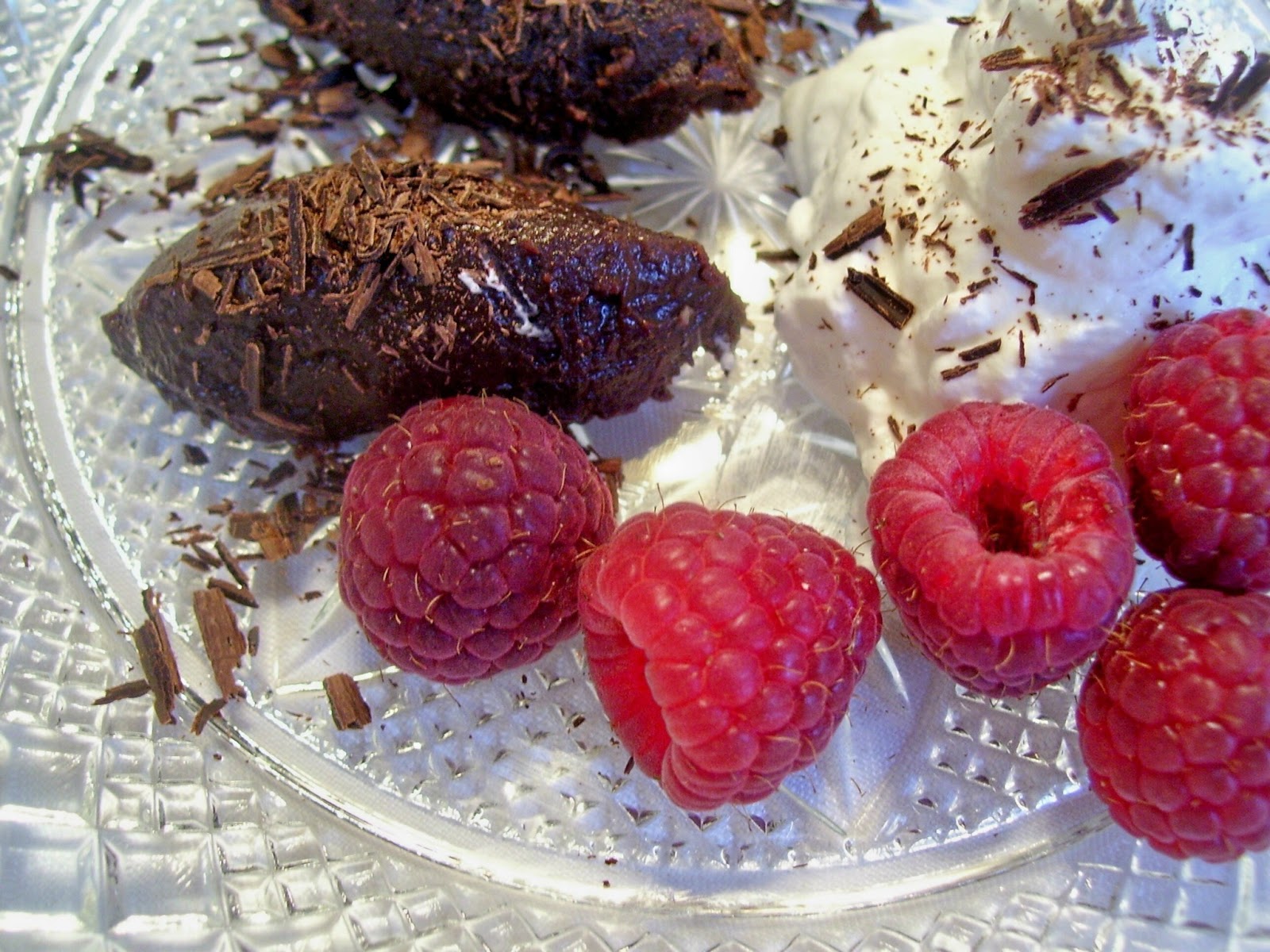
Sometimes, you have to adapt. I grabbed 2 spoons and formed the warm gooey souffle guts into chocolate quenelles. After dusting them with grated chocolate, I served the quenelles with fresh whipped cream and plump raspberries.  There were no feathery chocolate clouds or airy chocolate pillows. Nope. The quenelles were dense, intense, rich, and decadent.

A happy accident.

Sunday, March 3, 2013

Shots!

Bourbon.
Margaritas.
Bourbon margarita shots.
Small shots. Big flavor bombs.
Shoot. Suck. Lick.
I've certainly chugged down my share of them. In any form, (shots, rocks, or frozen)  bourbon margaritas have served me well over the years. For large off-site events at work, I've used the  potent concoction  for marinades, vinaigrettes, and glazes.

For a Makers Mark bourbon tasting held at historic Duncan Tavern in Paris, Kentucky, I filled 150 wax-dipped  Makers Mark shot glasses with bourbon margaritas before rimming each glass with grilled lime-marinated jumbo shrimp. It gave a new meaning to shrimp cocktail. Eat and shoot. 2 for 1. Double the fun.

The second year I taught the Bourbon Culinary Arts Cooking School at the Kentucky Bourbon Festival, I turned up the volume by mixing up 3 gallons of  bourbon margarita shots for the salad course. I used half of the bourbon margarita mix to marinate a few hundred jumbo shrimp and turned the rest into a spicy vinaigrette. I grilled the drunken shrimp until they were almost charred before tossing them with minced jalapenos, minced red bell peppers, diced avocados, diced purple onions, and fresh cilantro.  After dousing the salad with the spicy  vinaigrette, I spooned the mix into bibb lettuce cups and served them with fried sweet potato chips as a Bluegrass riff on ceviche with fried tostones.

While bourbon pairs beautifully with shrimp, the subtle caramel and vanilla undertones also lend gorgeous spicy depths of flavor to stews, soups, smoky baked beans, meat marinades, and desserts. When dolled up with margarita lipstick, bourbon brings more to the party.

At work,  I'm used to cranking out vats of bourbon margaritas, but I dialed it way back for a simple week night supper.

Bourbon Margarita Marinated Mahi Mahi.

Makers Mark Bourbon Margarita
1 1/4 oz Makers Mark
3/4 oz Grand Marnier
3/4 oz Fresh Sour Mix (1/2 cup sugar dissolved in 1/2 cup water with 1/4 cup lemon and lime juice)
3/4 oz Fresh Lime Juice

I doubled the recipe, added a pinch of coarse kosher salt,  blended the margarita, and gave it a taste. And another taste. Ok, I drank it all. Do over.

I slipped the mahi mahi filets into the margarita marinade and slid them into the refrigerate for an hour.  While the mahi soaked up the bourbon shots, I blanched 1 pound of pencil thin asparagus tips in heavily salted water for 3 minutes before plunging them into salted ice water to stop the cooking process. I drained the asparagus and placed them into the refrigerator to chill.

After preheating the oven to 350 degrees, I roasted a pint of whole grape tomatoes with sliced onions, garlic, halved limes, olive oil, salt, pepper, and ground ancho chili powder.  When the tomatoes collapsed and charred, I blended them with the onions, residual pan juices, and roasted lime juice.

I pulled the mahi filets from the marinade, patted them dry, and set them aside. With everything on deck, I prepared a glaze from the marinade. Working over a medium flame I brought the double margarita shot to a rolling boil,  reduced the heat, added 1/3 cup honey, and let it rip for 10 minutes. When the sweetened glaze reduced to a loose syrup, I pulled it from the heat and set it aside.

I cranked a cast iron grill pan over a high flame, brushed it with oil, and seared the mahi filets skin side for 3 minutes before turning them over for an additional 3 minutes. While the mahi filets were still warm, I brushed them the glaze, dusted them with lime zest, and slid them onto small mounds of red quinoa. After swirling the roasted tomato puree to the side, I tumbled the chilled asparagus tips over the top, finishing with coarse margarita salt.

Texture. Flavor. Sealed under the lacquered glaze, the flaky mahi meat calmed the ridiculous crunch of the nutty red quinoa. While bits of lime zest added tart zing, the peppers provided wet freshness. The asparagus was key. Haphazardly tossed over the roasted ancho tomato puree, the unadorned chilled tips were crisp, clean, and bright.

Simple flavors.
Complex extremes.
Take a shot.