Search This Blog

Thursday, March 28, 2013

Wine And Cheese

After slopping around knee deep in pureed chicken livers, sauteed black pudding blood sausages, and braised bony chicken feet for a whacked  charcuterie table at work, I was covered in gelatinous goo. When the guts settled and the evening was over, I started planning the next event.

I knew the food needed to be a bit tamer. Something calmer. Something normal.  Wine and cheese seemed like a safe route, so I played around and experimented with different takes on simple combinations of wine and cheese. Game on.

Wine.

Cracked Black Pepper White Wine Jelly.
A simple straight forward jelly with attitude.  Few ingredients. Big payoff.  With slight citrus undertones, I used an affordable Elk Creek Vineyards off-dry chardonnay for the base of the jelly. I brought 2 cups of the chardonnay
to a rolling boil in a heavy cast iron skillet before adding 3 1/2 cups sugar. I let it rip for 4 minutes (until the sugar dissolved into the wine), pulled it from the heat, and added 2 3oz pouches of liquid pectin along with 1/2 cup cracked Tellicherry peppercorns.

After ladling the pepper jelly into sterilized jars, I wiped the rims, sealed the lids, and processed them in a water bath for 10 minutes before carefully removing them to cool on soft kitchen towels.  When the jars came to room temperature, I
slid them into the refrigerator to help the jelly set up and congeal.


Cheese.

Gorgonzola Pecan Crackers.
Slightly pungent gorgonzola is typically paired with robust red wines or sweet white dessert wines. With that in mind, I knew the inherent sweetness of the spiced jelly would balance the soft saltiness of the gorgonzola. There are a gazzilion recipes for cheese crackers/wafers/cookies. Although they're not difficult to throw together, they can be finicky and tricky to pull off.  Recently, Michael surprised me with a copy of the Lee Bros. Charleston Kitchen cookbook. Because cheddar cheese wafers/crackers are iconic in Charleston, they included a version of their own.  I used their method, replacing the cheddar cheese with gorgonzole dolce cheese.

I crumbled 4 oz of gorgonzola dolce (the milder, younger version of gorgonzola piccante) into a stand mixer and added 1/2 stick of softened unsalted butter. After creaming them together for 3 minutes, I added 3/4 cups sifted all purpose flour, a pinch of salt, and 1/2 teaspoons red pepper flakes.  When the dough pulled away from the sides of the mixer, I formed into a 9 "x 2 " log and rolled it over roughly chopped pecans.  After pressing the nuts into the softened cheese, I wrapped the log in plastic wrap and slid it into the refrigerator to chill.

Twisted Wine and Cheese.

Snacks.
After preheating the oven to 350 degrees, I sliced the hardened gorgonzola cheese log into 1/4 inch rounds, lined them up on  a Sil Pat, and baked them until they were golden brown, about 24 minutes. I didn't leave the kitchen. I burn things. A lot.

While they were still somewhat warm, I stacked the crackers on a pink Himalayan salt block, dolloped a few with the cracked black pepper wine jelly, and served them with thinly sliced Anjou pears.

Here's the deal. They were fantastic. The combination was wonderfully strange. The crackers snapped under the oozing sweet jelly. While the crisp fresh pears added cleansing wetness, the peppercorns popped with biting heat, brightening the muted pungency of the crunchy gorgonzola cheese crackers.


Sticky fun.


Saturday, March 9, 2013

Bread And Water

It's funny how a hankering can spin on a dime and change completely. I had a hankering to bake bread. That notion left me with the hankering to make something to sop up with bread.

Irish Lamb Stew with Brown Soda Bread.
There are many thoughts and culinary theories behind Irish Lamb Stew. Traditions, methods, and riffs run the gamut. Traditionally, it's made with mutton, mutton neck bones,or gigelots flavored with  potatoes, onions, water/stock, and parsley. Sometimes carrots, turnips, parsnips, or leeks are added. The variations are endless.

I wanted something simple and pure. The true essence of Irish Stew is more about method than madness.

I made a quick early morning run to the Indoor Farmers' Market and picked up a gorgeous slab of meaty lamb ribs from Elmwood Stock Farm. With plenty of meat to bone ratio, I knew the lamb ribs would add deeper layers of flavor to the stew.

Traditionally, nothing in the stew is browned. Ingredients are layered, seasoned, bathed with water or stock, and allowed to simmer for a few hours. Simple.

After trimming most of the outer fat pockets from the rib slab, I split the ribs into individual pieces. I broke a little from tradition and briefly browned the ribs to render additional fat. I peeled 6 medium  russet potatoes, 4 large carrots, and three parsnips. I thinly sliced 3 of the potatoes, chopped the remaining potatoes into large wedges, diced 1 large onion, and sliced the carrots and parsnips into oblong pieces.

Layers.
After wiping out the dutch oven I used to brown the ribs, I placed the thinly sliced potatoes on the bottom to allow them to break down during the cooking process and help thicken the stew. I tumbled the onions over the potatoes, added the carrots and parsnips, and wedged the lamb ribs over the vegetables. I seasoned each layer with salt, cracked black pepper, and fresh thyme from my snowy deck. I ladled 4 cups of simmering chicken stock into the dutch oven (to just cover the lamb) and placed the remaining potato wedges on top of the lamb to steam as the stew braised.

I covered the stew with parchment paper, clamped the heavy lid into place, slid it into a 350 degree oven, and let it rip for 3 hours.  After 1 1/2 hours, I pulled the meat from the bones, tucked it into the vegetables, discarded the stripped bones, and tossed the stew back into the oven.

Brown Soda Bread.
Possibly,  the easiest bread on the planet. Rustic and simple. I sifted 1 teaspoon baking soda and 1 teaspoon salt with 4 cups (2 cups each) Wiesenberger Mill whole wheat and unbleached white flour.  After adding 1 1/2 cups buttermilk, I gently kneaded the dough 8 times, formed it into flat ball, carefully placed it into a large cast iron skillet, sliced a cross across the top, and slid it into the oven to bake alongside the stew. (about 45 minutes, until browned).

After 2 hours, the stew needed more liquid. Dilemma. I had my usual bag of tricks. I wanted to add Guiness or red wine. Big flavor with little effort. That's typically how I role. Did I really want to muck it up? Nope. I kept it simple and added water. Water? Yep.

I ladled the lamb stew into large pasta bowls, scattered fresh parsley over the top, and finished with a few scallion slivers.

The mild gaminess of the tender lamb paired beautifully with the sweet carrots and parsnips. Because I didn't jump through hoops to thicken the stew, it was light and robust. Torn chunks of the grainy brown soda bread were perfect soppers for the rich delicate stock. Packed with contrasts, the bold simplicity alone gave the stew surprising complexity, depth,  and balance.

Fabulous.


Friday, March 8, 2013

Piece Of Cake

Occasionally, I'll get a wild hair and take a ride on the sweet side. I'm not particularly clever or good at baking, but my clumsiness doesn't stop me.  I keep plugging away.  I was craving chocolate.  Chocolate anything.  The Nutella jar was empty and the Kit Kats were long gone, so I decided to bake a chocolate something. Because savory souffles have always been well within my comfort zone, I thought a chocolate souffle would be a piece of cake. Ba-da-bing.

Chocolate Souffle.
I used a combination of 71% Costa Rican dark chocolate and Ghirardelli semi-sweet chocolate (4 ounces each). After roughly chopping the chocolate into bite-sized pieces, I melted them in a bowl over simmering water until smooth.  Using a stand mixer, I beat 3 Elmwood Stock egg yolks with 2 tablespoons of warm water and 2 tablespoons of sugar until the yolks turned into pale yellow ribbons (about 4 minutes).  When the chocolate cooled down, I added the eggs yolks and set it aside.

After thoroughly cleaning the mixing bowl to rid it of any residual fat, I beat 8 room temperature egg whites on medium speed until frothy, added 1/2 cup sugar, increased the speed to high, and beat the whites until they were stiff.

I buttered a 1 1/2 quart souffle dish, dusted it with sugar, and placed it in the freezer to set.  After lightening the melted chocolate with 1/3 of the beaten egg whites, I carefully folded the remaining whites into the mix until the base was light and fluffy.I covered the unbaked chocolate souffle with plastic wrap and slid it into the refrigerator to rest.  To rest? Really?  What was I thinking?  It wasn't a grilled pork chop. Hello clumsy baker. Welcome to the dance.

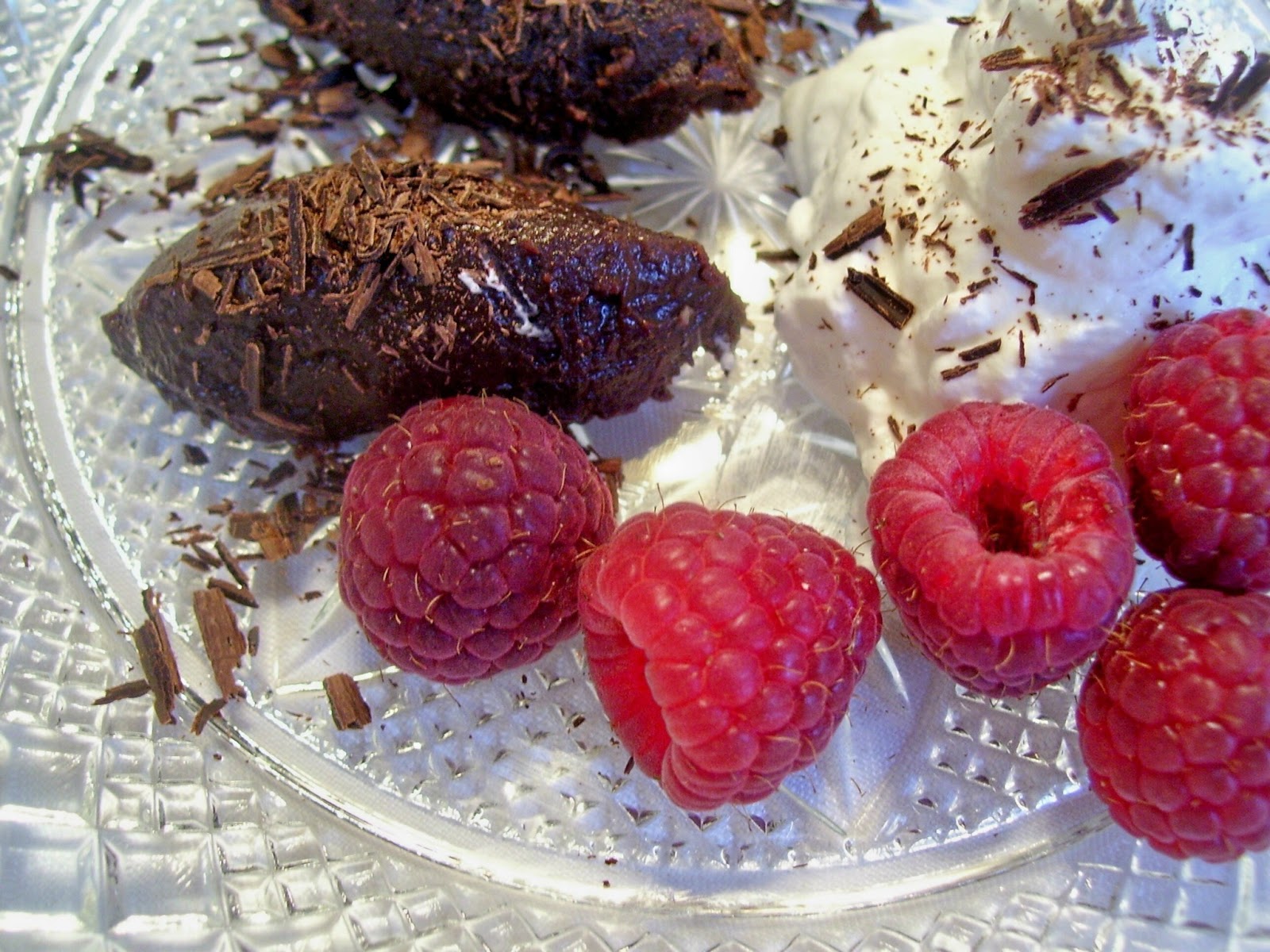
Well, the little nappy time must have turned into a full fledged coma.  After baking the rested chocolate souffle for 40 minutes at 400 degrees, it came out of the oven flatter than a pancake. It didn't rise. Or puff. Or move. Zilch. Nothing. Sporting a paper-thin cake layer, the souffles dish was filled with gurgling molten chocolate. I had to laugh at myself. It was hysterical and ridiculous.

Sometimes, you have to adapt. I grabbed 2 spoons and formed the warm gooey souffle guts into chocolate quenelles. After dusting them with grated chocolate, I served the quenelles with fresh whipped cream and plump raspberries.  There were no feathery chocolate clouds or airy chocolate pillows. Nope. The quenelles were dense, intense, rich, and decadent.

A happy accident.

Sunday, March 3, 2013

Shots!

Bourbon.
Margaritas.
Bourbon margarita shots.
Small shots. Big flavor bombs.
Shoot. Suck. Lick.
I've certainly chugged down my share of them. In any form, (shots, rocks, or frozen)  bourbon margaritas have served me well over the years. For large off-site events at work, I've used the  potent concoction  for marinades, vinaigrettes, and glazes.

For a Makers Mark bourbon tasting held at historic Duncan Tavern in Paris, Kentucky, I filled 150 wax-dipped  Makers Mark shot glasses with bourbon margaritas before rimming each glass with grilled lime-marinated jumbo shrimp. It gave a new meaning to shrimp cocktail. Eat and shoot. 2 for 1. Double the fun.

The second year I taught the Bourbon Culinary Arts Cooking School at the Kentucky Bourbon Festival, I turned up the volume by mixing up 3 gallons of  bourbon margarita shots for the salad course. I used half of the bourbon margarita mix to marinate a few hundred jumbo shrimp and turned the rest into a spicy vinaigrette. I grilled the drunken shrimp until they were almost charred before tossing them with minced jalapenos, minced red bell peppers, diced avocados, diced purple onions, and fresh cilantro.  After dousing the salad with the spicy  vinaigrette, I spooned the mix into bibb lettuce cups and served them with fried sweet potato chips as a Bluegrass riff on ceviche with fried tostones.

While bourbon pairs beautifully with shrimp, the subtle caramel and vanilla undertones also lend gorgeous spicy depths of flavor to stews, soups, smoky baked beans, meat marinades, and desserts. When dolled up with margarita lipstick, bourbon brings more to the party.

At work,  I'm used to cranking out vats of bourbon margaritas, but I dialed it way back for a simple week night supper.

Bourbon Margarita Marinated Mahi Mahi.

Makers Mark Bourbon Margarita
1 1/4 oz Makers Mark
3/4 oz Grand Marnier
3/4 oz Fresh Sour Mix (1/2 cup sugar dissolved in 1/2 cup water with 1/4 cup lemon and lime juice)
3/4 oz Fresh Lime Juice

I doubled the recipe, added a pinch of coarse kosher salt,  blended the margarita, and gave it a taste. And another taste. Ok, I drank it all. Do over.

I slipped the mahi mahi filets into the margarita marinade and slid them into the refrigerate for an hour.  While the mahi soaked up the bourbon shots, I blanched 1 pound of pencil thin asparagus tips in heavily salted water for 3 minutes before plunging them into salted ice water to stop the cooking process. I drained the asparagus and placed them into the refrigerator to chill.

After preheating the oven to 350 degrees, I roasted a pint of whole grape tomatoes with sliced onions, garlic, halved limes, olive oil, salt, pepper, and ground ancho chili powder.  When the tomatoes collapsed and charred, I blended them with the onions, residual pan juices, and roasted lime juice.

I pulled the mahi filets from the marinade, patted them dry, and set them aside. With everything on deck, I prepared a glaze from the marinade. Working over a medium flame I brought the double margarita shot to a rolling boil,  reduced the heat, added 1/3 cup honey, and let it rip for 10 minutes. When the sweetened glaze reduced to a loose syrup, I pulled it from the heat and set it aside.

I cranked a cast iron grill pan over a high flame, brushed it with oil, and seared the mahi filets skin side for 3 minutes before turning them over for an additional 3 minutes. While the mahi filets were still warm, I brushed them the glaze, dusted them with lime zest, and slid them onto small mounds of red quinoa. After swirling the roasted tomato puree to the side, I tumbled the chilled asparagus tips over the top, finishing with coarse margarita salt.

Texture. Flavor. Sealed under the lacquered glaze, the flaky mahi meat calmed the ridiculous crunch of the nutty red quinoa. While bits of lime zest added tart zing, the peppers provided wet freshness. The asparagus was key. Haphazardly tossed over the roasted ancho tomato puree, the unadorned chilled tips were crisp, clean, and bright.

Simple flavors.
Complex extremes.
Take a shot.


Wednesday, February 20, 2013

+ Spice +

I'm not sure where my affection for Moroccan food came from. Most of my deep-rooted food obsessions are related to things I grew up eating. I love Ethiopian food because Ababa cooked it for us. It's as familiar to me today as it was when I was a kid.  Not so with Moroccan food.  My family never made any side trips to Morocco during our stint in Africa. Back in the day, my father was incredibly adventurous.  When we lived in Ethiopia, we covered most of the East African Coast. Our holidays were spent navigating dry river beds on Kenyan safaris or camping under giant suspended silk parachutes on the molten hot beaches of the Red Sea. Surprisingly, the closest we ever came to Morocco was a sail-by on an ocean liner as we passed through the Strait of Gilbraltar on our final voyage back to America.

Tajine.
A deep glazed-earthenware dish with a conical lid that fits flush with the rim.  It is used throughout North Africa for preparing and serving a range of of dishes that are cooked slowly in a flavoured basting liquid: these preparations themselves are also called tajines and are made with vegetables, such as potatoes and courgettes (zucchini);  fish; chicken with quinces or dates; meat; or even fruit.  Mutton with prunes, or veal with tomatoes and aubergines (eggplants) are typical.
                                                                               -Larousse Gastronomique
Tajines are vibrant, alluring, intoxicating, and addicting. As a grown up, my first taste of a sultry tajine totally seduced me with its warm exotic spices. It had me. Because tajines are personal, anything can be thrown into a tajine, but spices are key.

Thanks to Michael, I had a pantry filled with amazing spices and spice blends. Check.

Chicken Tajine with Figs and Apricots.
After making a quick stop at the Indoor Winter Market to pick up a pre-ordered  2 pound organic hen from Elmwood Stock Farm, I boarded the Marrakesh Express.

Tajines can be prepared with or without a tajine cooking vessel. A dutch oven is a  great substitute, but an earthenware tajine has a slightly opened conical lid that allows wisps of steam to escape as flavored condensation builds up,  rises, and drips back down into the stew. Low and slow.

Using sharp kitchen sheers, I snipped the backbone from the small hen and broke it down into 4 petite serving pieces (2 breasts, 2 legs/thighs).  After tossing the hen parts with olive oil and fresh blood orange juice, I rubbed them generously with 1/4 cup ras el hanout (paprika, cumin, cinnamon, ginger, coriander, turmeric, black pepper, cardamom, allspice, mace, white pepper, rosebuds, nutmeg, cloves, saffron, and bay leaves). When the chicken was beautifully smothered, covered, and stained, I tossed it into the refrigerator (uncovered) to marinate for a few hours.

Mise en place.
While the chicken took a bath in the ridiculous spice blend, I halved 2 cups of dried black figs and dried apricots. I thinly sliced a whole onion, quartered 2 tomatoes, minced 4 garlic cloves, peeled a small bunch of baby carrots, and set them aside before blooming a generous pinch of saffron in 2 cups of simmering chicken stock.

Low and slow.
So, here's the deal. Ceramic earthenware tagines need a heat diffuser when used over an open gas flame.  Traditionally, meats, spices, fruits, and vegetables are slowly sauteed in tajines over low heat, covered, and simmered for hours. I didn't have a heat diffuser, so I improvised. I used a large cast iron skillet to brown the chicken on all sides before setting the pieces aside. I sauteed the sliced onions in the remaining stained sizzling oil until they were translucent and placed them into the bottom of the tajine.  After deglazing the skillet with 1/4 cup of the chicken stock, I added 1 teaspoon each turmeric, sumac, harissa, cumin, coriander, paprika, salt, and pepper. When the spices formed a toasted paste, I swirled the saffron-infused stock into the skillet to create an aromatic braising stock.

After layering the tajine with carrots, apricots, and figs, I nudged the chicken pieces into the mix before finishing with a layer of quartered tomatoes, apricots, figs, sliced lemons, sliced blood oranges, halved fresh plums, and carrots.  I drizzled Nickels Pure Raw Kentucky Honey over the chicken, added the fragrant chicken stock, nestled the lid onto the tajine, and slid it into a 325 degree oven to braise for  2 1/2 hours.

I fought the urge to check on the stew. I simply let it rip while we drank wine in the parlor. Hands off. Lazy supper. Perfect.

I filled deep pasta bowls with pine nut-flecked couscous. After spooning the chicken, vegetables, and fruit over the delicate grains, I doused them with the intense pan sauce before finishing with a few fresh cilantro leaves.

It was ridiculous.  The dried apricots and figs plumped from the long braise. The squirting fat fruit melted into the collapsed tomatoes, plums, and onions, creating a velvety savory/sweet sticky glaze with contrasting textures, body, and layers of flavor that enveloped the incredibly moist chicken. Finger food. We ripped the tender meat  from the bones, dragged it through the sauce, and used the fruit/vegetable melange as candied chasers.  Messy business. Pull. Dip. Swipe. Suck. Repeat.

Stained fingers.
Spiced lips.
Sexy food.

Fabulous.


Thursday, January 31, 2013

Layers

Less is more.

I make a lot of fresh pasta. While purchased dried pasta is fantastic,  fresh made pasta feels richer, softer, and more delicate to me. That being said, whenever I do make fresh pasta, I typically kill it with a heavy handed overwrought sauce.  I can't help myself. I'm a saucy guy. I love sauces. The last time I rolled out gorgeous feathery strands of fresh angel hair pasta, I smothered them with a thick tomato sauce weighed down with dense meatballs. Although I didn't mind, I watched Michael push the meatballs to the side while trying to tug a few fragile strands from the apparent gravy graveyard.  "I want to taste your pasta", he said. Point taken. A point I've never forgotten.

It should always be about the pasta.
Clinging to that mantra,  I battled my inner sauce demons and gave it a shot with a relatively simple and unconventional  multi-layered lasagna.  Lasagna can be a quirky beast.  It can be extremely easy or incredibly  ridiculous to throw together. Or somewhere in between. I happily wallowed in between.

Pasta.
I sifted 2 1/2 cups of Weisenberger Mill unbleached white flour (made from soft red winter wheat) into a food processor with a pinch of salt, 2 whole eggs, and 3 egg yolks. I pulsed the mix until it formed  a ball, adding a few drops of cold water to help bring it together.  After flouring a large wooden cutting board, I kneaded the sticky dough ball 10 to 15 times  before covering it with a bowl for an hour to relax the glutens.

After an hour, I cut the pasta dough into fourths. Working with each section at a time, I floured the dough, folded it in half, and passed it through the lowest setting of a pasta roller several times.  When the dough felt pliable, I started passing it through  each consecutive smaller setting until I reached the next to last setting. I didn't want to risk tears or splits, so I stopped when the pasta sheets were paper thin, cut them in half, and placed them on floured waxed paper sheets strewn across every square inch of the kitchen. After rolling out every crumb of pasta dough, I cut the sheets into 7 inch lengths and let them air dry.  The amount of pasta was staggering. Ridiculous, even. Michael came into the kitchen for a snack, laughed, and fled. Smart move.

Sauce.
Or the un-sauce. Because I wanted something simple, pure, and deliciously transparent, Marcella Hazan's iconic and sexy 3 ingredient "Tomato Sauce with Onion and Butter" felt like the perfect fit. I hand crushed a 28 ounce can of whole San Marzano tomatoes into a heavy sauce pan before adding 5 tablespoons of butter  , a sliced onion, and a pinch of kosher salt. After simmering the sauce for 45 minutes, I discarded the onion, swirled the butter fat throughout the sauce, and pulled it from the heat. Luscious. Sweet. Buttery. Simple.

Layering.
I brought a huge pot of water to a rolling boil, showered it with a generous handful of kosher salt, and cooked the lasagna sheets in batches for 3 minutes (just shy of al denta) before plunging them into salted ice cold water to stop the cooking process and resting them on dish towels to absorb the excess moisture.

I buttered a loaf pan, shredded my homemade fresh mozzarella cheese, and grated a block of parmigiano reggiano.

After brushing the bottom of a loaf pan with a layer of the tomato sauce, I nestled a lasagna sheet over the sauce before building thin haphazard alternating  layers of pasta, parmigiano cheese, mozzarella cheese, tomato sauce, and minced fresh parsley. I layered and layered and layered until I simply ran out of stuff. I topped the final layer with  tomato sauce and a scattering of mozzarella before sliding the monstrous 22 layer lasagna into a 350 degree oven to bake (covered)  for an hour, removing the cover during the final 15 minutes to brown the top. 22 layers. Think about it.

While it baked, the lasagna buckled and plumped from the heat. It seemed to beg release from its corseted snare. Nope.  I let it rip for the full hour before pulling it from the oven to rest for 20 minutes.

After slicing the lasagna into wedges, I carefully wobbled them onto pools of tomato sauce before tumbling bright bitter baby arugula  salads to the side.

Mangled and twisted, it wasn't pretty or perfect. While the lasagna appeared dense, it wasn't. The undulating  layers had just enough separation to suspend the paper thin pasta sheets between the cheeses and the sauce.


Peppered with restrained whispers of soft fresh mozzarella, nutty parmigiano, and buttery sweet sauce, the lasagna was uncannily delicate, light, airy, and utterly decadent.


Finally, it was all about the pasta.


Sunday, January 27, 2013

Cheese!

I've had a lot of time on my hands.

With my schedule quickly filling up, I stepped back and took a whopping 9 day vacation. Boom. In the middle of January. A vacation. Other than celebrating Michael's birthday with a short jaunt out of town, I had nothing planned. Nada. Nothing. I wore pajamas every day and puttered around the kitchen. The fun kind of puttering. Relaxed. No agenda. No one to please. No costing, pricing, ordering, prepping, or cooking for big crowds. Just puttering.

A while back, Michael gave me a cheese making packet for my birthday. While I've already gone down the simple homemade ricotta cheese route, I haven't tried other cheeses because I knew they required stuff. Stuff I probably wouldn't understand. As it turned out, the process was fairly straightforward.

Armed with my handy dandy Urban Cheesecrafter brown paper packets,  I spent a fabulous day making homemade mozzarella cheese. Aside from a couple of missteps, I had a blast.

**The Urban Cheesecrafter Kit included easy and precise instructions. Easy? Check. Precise? My fail. Apparently, precision and attention to detail should have been the order of the day. Who knew? Unfortunately, I've never been much of a rule follower.  I didn't use chlorine-free water to proof the vegetable-based rennet and citric acid.  I used tap water. I thought I had enough whole milk. I didn't. My first batch of  "cheese" left me with a huge pot of crap. A chemistry experiment gone terribly wrong. I was terrified to pour the gurgling non-cheese down the drain, so I ladled the festering mess into bags and buried them in the trash.

Do-over.
Mulligan.

I shook up a very strong Bloody Mary, poured it over shaved ice,  and started over.

Before getting started, I dissolved 1/4 rennet tablet in 1/2 cup chlorine-free water and 1 1/2 teaspoons citric acid in 1 cup chlorine free water.


After adding the dissolved citric acid to a  gallon of farm direct whole pasteurized Chaney's milk, I warmed the milk over low heat. When the milk reached 90 degrees, I pulled it from the  heat and carefully added the rennet.

The reaction was almost immediate. I placed the pot back over the flame and  (without stirring) gently moved the tiny curds around with an up and down motion until they started to thicken and coagulate. Within seconds, the curds separated from the whey and pulled away from the sides of the pot. When they reached 105 degrees, I ladled the curds into a cheesecloth-lined colander to drain.

I dumped the curds into a large microwavable bowl and heated them in the microwave for 1 minute. After folding them over several times to evenly distribute the heat, I drained off some additional whey and microwaved the curds for 30 seconds more. As I folded them over again, the curds started to feel like mozzarella cheese.


Using an instant read thermometer, I checked to make sure the cheese was 135 degrees before adding the cheese salt (fine kosher salt). After stretching and folding the cheese to incorporate the salt, I formed the hot cheese into a ball and dropped it into a bowl of ice water to chill.


Cheese!
Soft. Light. Fresh. Fabulous.

We snacked on a small hunk of the mozzarella before I wrapped up  the remaining cheese and slid it into the refrigerator to rest for another day.

I had big plans for that cheese ball...