Search This Blog

Sunday, January 15, 2017

Cracked

Dressed up or dressed down, fresh lobster is special, indulgent, and sexy as all get out.
Whether fast and furious like a beach side romp on strewn newspapers splashed with sticky drawn butter or prepared  slow and steady finished with a booze-infused cream sauce, eating fresh lobster is unabashedly decadent.

While I'm totally game for a down and dirty lobster boil, I'm a hopeless fool for the retro antics and lobstery punch of an old school Lobster Newberg.

Lobster Newberg, created at Delmonico's in New York during the late 1800's, is a simple magical amalgamation of lobster, cream, stock, sherry, brandy, herbs, and aromatics. Served over toasted bread, rice, or puff pastry vol au vents (pastry shells) Lobster Newberg is a romantic throwback to demure extravagance. Although there are great shortcuts for quicker results. sometimes it's fun to bring out the big guns for a labor of love.

Lobster Newberg.
An old fashioned lobster date.
Slow and steady.

Lobster.
So, I haven't killed or cooked a live lobster since my school days. While options abound for already prepared lobster, I needed the bodies and shells to fortify a stock, so I picked up two 1 1/2 pound live lobsters from the Lexington Seafood Company and kept them packed on ice while I prepped for my date.

I filled a very large stock  pot with enough water to cover 2 live lobsters (about 14 cups), added a handful of whole black peppercorns, 3 bay leaves, and 3 halved lemons. After cranking the heat to high, I slid the lobsters into the freezer for 10 minutes to put them to sleep. When the water came to a rapid boil, I added 1/2 cup salt, removed the lobster from the freezer, and slipped them head first into the boiling water. When the water came back to a simmer, I let the lobsters cook for 6 minutes (until they turned bright red) before plunging them into salted iced water to stop the cooking process.

Cracked.
They make lobster bibs for a reason. Or wet suits. Cracking lobster is messy business. Dodging flying cracked shells and splattering lobster juice, I worked over a large bowl to salvage the precious drippings. Once cooked and cooled, I ripped the tails from the heads, sliced them in half, removed the meat (reserving 2 halves) and set the heads aside. After cracking the knuckles to remove the meat, I added it to the tails and went after the claws. Claws can be tricky and prickly. Using the dull side of a chef's  knife, I cracked the claws on opposing sides, carefully pulled them apart, and slipped the meat from the broken shells. I split the bodies in half, reserved the tomalley (liver) for other shenanigans, discarded the innards, chopped the outer shells into large pieces, and set them aside. Cracked, smacked, and covered with lobster bits, I slid the dispatched  tender lobster meat into the refrigerator, and moved on.

Stock.
I love making stock.
After heating 3 tablespoons canola oil in a stock over a medium flame, I smashed  the lobster shells into smaller pieces to expose more surface area to the heat, and tossed them into sizzling oil. When they started to toast, I added 3 heaping tablespoons tomato paste and tossed it with the broken shells. As the tomato paste started to caramelize, I deglazed the pot with 3/4 cup brandy and fired it up. After the flames died down, I added 1 1/2 cups chopped celery, 1 cup chopped onion, 3 chopped carrots, 1 cup chopped fresh fennel, 2 cups pureed Elmwood Stock Farm canned diced summer tomatoes, 1 cup dry white wine, 8 cups water, 2 bay leaves. and 4 sprigs fresh tarragon. I brought the stock to a boil, reduced it to a simmer, skimmed the scum, and let it rip for 1 1/2 hours before straining the stock through a cheesecloth-lined chinois, mashing the solids to extract as much flavor as possible.

Sauce.
Working over a medium flame, I melted 3 tablespoons unsalted butter in a heavy saucepan and added 3 tablespoons flour. When the flour/butter mixture formed a smooth blond paste, I added 1 cup sherry, 1 tablespoon smoked paprika, salt, ground white pepper, and 4 cups lobster stock. I brought the sauce to a boil, reduced the heat, and let it simmer for 20 minutes before adding 1 cup heavy cream. After letting the sauce thicken until it coated the back of a spoon, I pulled it from the heat, and set it aside.

I warmed the reserved lobster in melted unsalted  butter over a gentle low flame before nestling the pieces around puff pastry shells feathered with lightly dressed baby lettuces. After napping the lobster tails, knuckle meat, and claws with the sauce,  I finished with a faint drizzle of Sriracha lemon oil.

With a delicate bouncy bite, the buttery sweet meat countered the tickling acidic heat from the lemony Sriracha as it swirled and puddled through the creamy sherry-spiked sauce.While the baby lettuces provided perky fresh bites, the airy puff pastry added crisp flaky crunch.

Lobster on lobster.
Cracked.

Rich.
Luxe.
Fabulous.

The perfect date.


Wednesday, January 11, 2017

The Other Gumbo

Gumbo Z'Herbs. Gumbo Aux Herbs. Green Gumbo.
The other gumbo.

Whether prepared with or without meat or with or without roux, the unusual gumbo z'herbs is always jam-packed with a multiple variety of greens. Green gumbo requires a lot of greens.While purists claim it should never contain meat or roux, some versions of this deep south gumbo pack the double punch of both. Although a meat-filled version is customarily cooked, served, and eaten on Maundy Thursday during the week of Mardi Gras, it's also served year round.

Unlike the more familiar gumbos of the deep south, gumbo z'herbs has deep rooted traditions that involve luck and good fortune. While almost any kind of greens can be used for gumbo z'herbs, tradition holds that an odd number ( 5, 7, 9, 11) insures good luck and that the number used reflects the number of new friends to be made during the year. Because pigs move forward when they eat, eating pork is a lucky symbol for moving forward. Because greens are the color of money, they represent wealth and good fortune. So, whether it's Fat Tuesday, Maundy Thursday, or any other day of the year, throw the dice, play the numbers, toss a pork-filled pot of green gumbo on the stove, and may the luck be with you.

A good gumbo takes time.
It begs to be slowly coaxed and courted.
Good things come to those who wait.
And chop.

Gumbo Z'Herbs.
I rinsed, chopped, and set aside individual bunches (about 3 1/2 pounds) of Elmwood Stock Farm black kale and beet greens, Quarles Farm mustard greens, Shelby County turnip greens, Hoot Owl Holler Farm Appalachian greasy greens, scallions, fresh spinach, watercress, collard greens, fresh parsley, and 1/2 head cabbage.


With the chopping out of the way, I cooked the greens in 12 cups water for 30 minutes, drained them (reserving the cooking liquid), pureed half the greens with a hand held stick blender, tossed the pureed greens with the chopped cooked greens, and set them aside.

To roux or not to roux?
I'm all roux. Not so much for the slight thickening it provides, but more for the subtle smoky and nutty undertones it imparts.

I placed a very large stock pot over a medium flame before adding 1/4 cup peanut oil, 1/4 cup bacon grease, and 1/2 cup flour. Using a wooden spoon, I carefully stirred the flour into the fats and let it slowly bind into a creamy paste. With full attention, I stirred the roux constantly until it slowly turned from blond to light brown to medium brown. Just before it went to the dark side, I added 1 chopped onion, 1 chopped red bell pepper, 1 chopped green bell pepper, and 4 chopped garlic cloves.

After letting the vegetables sweat, melt, and caramelize in the roux, I added 1 quart brown turkey stock, the reserved 12 cups greens cooking water, 4 tablespoons lemon juice, 5 sprigs fresh thyme, 4 bay leaves, and 4 heaping tablespoons Cajun seasoning (2 teaspoon salt, 2 teaspoons garlic powder, 2 1/2 teaspoons paprika, 1 teaspoons black pepper, 1 teaspoon onions powder, 1 1/4 teaspoon dried oregano, 1 1/4 teaspoon dried thyme, 1 teaspoon cayenne pepper).

I brought the liquid to a boil, added 2 pounds smoked ham hocks, reduced the liquid to a simmer, partially covered the stock pot, and let it gently ripple for 2 1/2 hours, skimming the scum from the surface every 1/2 hour or so.

At the 2 hour mark, I scooped the hocks from the gumbo, pulled the meat from the bones, added it back into the pot, and tumbled 2 pounds pan-seared pork sausage (in lieu of andouille sausage) into the gumbo.

After 30 minutes, I pulled the gumbo from the heat, spooned it over white rice, and dusted it with file powder (ground sassafras) before finishing with sliced scallions, blanched spinach leaves, and a pinch of cayenne pepper.

Tempered by the heat, mellowed with pork fat, and napped in nutty pot likker, the mixed greens surrendered their peppery bitter assertiveness to the long slow simmer, gently melting and swirling through the tender bits of meat. While the delicate ground sassafras (file powder) added subtle hints of woodsy root beer-like earthiness, the fresh scallions perked up the sleepy gumbo with biting wet crunch. Soulful. Soothing. Humble.

Gumbo Z'herbs.
Eat your greens.


Thursday, December 22, 2016

Slurp. Suck. Repeat


It's prime time for oysters.
Served with mignonette sauce, cocktail sauce, horseradish, or hot sauce, briny plump raw oysters on the half shell are downright sexy. That said, on occasion it's fun to jack things up and turn on the heat.

Skillet Roasted Oysters with Spiced Compound Butter.
Compound butters are the simplest way to add punch to just about anything. Make them in advance, chill, and stash them away until needed.

A little dab will do you.
I tossed 1 stick softened room temperature unsalted butter into the bowl of a stand mixer before adding 1 tablespoon Green County Cacklin' Hen Jalapeno Hot Sauce, 2 tablespoons minced shallot, 2 minced Henkels hot red peppers, 1 tablespoon smoked paprika, 2 tablespoons chopped fresh cilantro, flaked sea salt, cracked black pepper, and the zest of 1 lime. After whipping the butter into a frenzy, I scooped it onto a 10"x 10" sheet of plastic wrap, gathered the butter to the edge, formed it into a loosey-goosey log, and rolled it into a bumpy cylinder. After smoothing it out, I twisted the ends of the plastic wrap to compact the butter into a tight roll and slid it into the refrigerator to chill.

Aw, shucks..
Oyster shucking can be a challenge. Practice makes perfect. Diligence, patience, an oyster knife, a sturdy dish towel (or a meshed oyster glove), and a glass of wine help make it much easier.
After scrubbing, rinsing, and patting dry  2 dozen Blue Point oysters (from Lexington Seafood Company), I  used a dish towel to secure each oyster cupped side down, carefully wedged the tip of an oyster knife into the hinged end, and wiggled the knife to pop open the hinge before sliding the knife across the top shells and slicing the abductor muscles from bottom shells to release the flesh . Being mindful of the precious oyster liquor, I tossed away the top shells and nestled the oysters into a large cast iron skillet layered with chunky rock salt.

 I topped each oyster with 1/4" discs of the chilled compound butter and slid them into a blistering
450 degree oven. When the melted butter bubbled around the slightly curled edges of the oysters ( about 5 minutes), I pulled them from the oven, let them rest, and finished each oyster with a splash of fresh lime juice.

Stained with spice, the  soft oysters poached in the steaming hot butter, gently rendering the slippery raw flesh almost creamy and custard-like. Plumped from the quick blast of heat and teetering on the edge of barely cooked, the brackish oysters popped through the bold overtones of smokey heat. While the fresh lime provided bright acidity to counter the buttery oyster jus, flecks of minced shallot and hot peppers added biting fresh crunch.

Slurp. Suck. Repeat.
Puttin' on the Ritz.


Saturday, December 10, 2016

Roots And Stalks


I'm a celery junkie.
Smear pimento cheese into crisp celery stalks and I'm a happy camper. Pony up a few  nubs side by side with chunky bleu cheese as a side kick for Buffalo chicken wings and I'm set. Spear leafy topped celery sticks into potent bloody marys and color me buzzed. And yes, I plead guilty to swiping snapped off broken pieces of celery through the peanut butter jar, much to Michael's chagrin. All of that said, I'm an absolute fool for long cooked braised celery. Smack a platter of juicy pot roast in front of me and I'm all over the celery, scooting the meat aside for garnish.  It is what it is. My lusty affair with celery.

Celery is a classic flavor building block for almost everything. While we may not even know it's there, we'd know it if it wasn't there. Usually relegated to supporting character, I brought it front and center.

Celery Soup with Horseradish whipped cream.
I kept it simple and clean.

The root of it all.
I trimmed, washed, and chopped 1 large bunch (about 2 pounds) organic celery and set it aside. After slicing 2 large cleaned leeks into thin half moons, I sauteed the leeks in equal parts butter and olive oil (2 tablespoons each). When the leeks started to wilt, I added 1/2 cup chopped Casey County candy onion, 1 clove minced garlic, a pinch white pepper, and flaked sea salt. Just before the onions started to take on color, I deglazed the pan with 1/2 cup white wine, let it reduce by half, and added the reserved celery. For body (in lieu of a starchy potato), I peeled and chopped 1 pound celery root and sliced the attached celery root stalks before tossing them into the pot with the simmering celery. When the wine evaporated, I added 1/2 teaspoon celery salt, 1 teaspoon celery seed, and 6 cups water. I brought the celery stock to a boil, reduced it to a simmer, covered the pot, and let it rip for 40 minutes.

When the vegetables were tender, I used a blender to carefully puree the soup in batches, passed it through a fine sieve to remove the fibrous solids, and returned the velvety soup to the hot pot. I brought the soup to a gentle simmer, splashed it with fresh lemon juice, and added 1/2 cup cream fraiche. After swirling the cream fraiche through the soup. I finished with quenelles of horseradish whipped cream, fresh celery leaves, and slivered radishes.

Drinkable celery.

Simple.
Fresh.
Fabulous.


Tuesday, November 15, 2016

Acorn Squash. Hold The Brown Sugar.

I fall for buttery brown sugar-glazed acorn squash as much as the next guy.  Amping up its inherent sweetness with a sticky caramelized glaze seems to be the go to prep for the pint sized squash.  That said, acorn squash doesn't have to be a one trick pony. Swirling it through a plumped  bread pudding laced with nutty gruyere cheese and sauteed baby kale takes it from to sweet to savory without missing a beat.

Savory Roasted Acorn Squash Bread Pudding 
A fun little riff on a fall favorite.

Squash.
I halved 2 Casey County acorn squash, scooped out the seeds, brushed the flesh with olive oil, and seasoned them with salt and cracked black pepper before placing them cut side down onto a parchment paper-lined sheet pan. After halving a third acorn squash and removing the seeds, I used the ribs as a guideline to slice the squash into half moons, brushed them with olive oil, seasoned them, and fanned them onto a separate parchment-lined sheet pan.

I slid the squash into a preheated 350 degree oven, let them rip for about 45 minutes until they were tender, pulled them from the oven, and set them aside.


Custard.
I sauteed 2 cups finely chopped baby kale in 2 tablespoons olive along with 1 minced shallot, 1/8 teaspoon freshly ground nutmeg, salt, and pepper. When the kale started to wilt, I pulled it from the heat and set it aside to cool.  After beating 4 large eggs until they were frothy, I added 2 cups 1/2 and 1/2, and whisked the two together until they were well incorporated before pouring the custard over 8 cups cubed Sunrise Bakery focaccia bread.

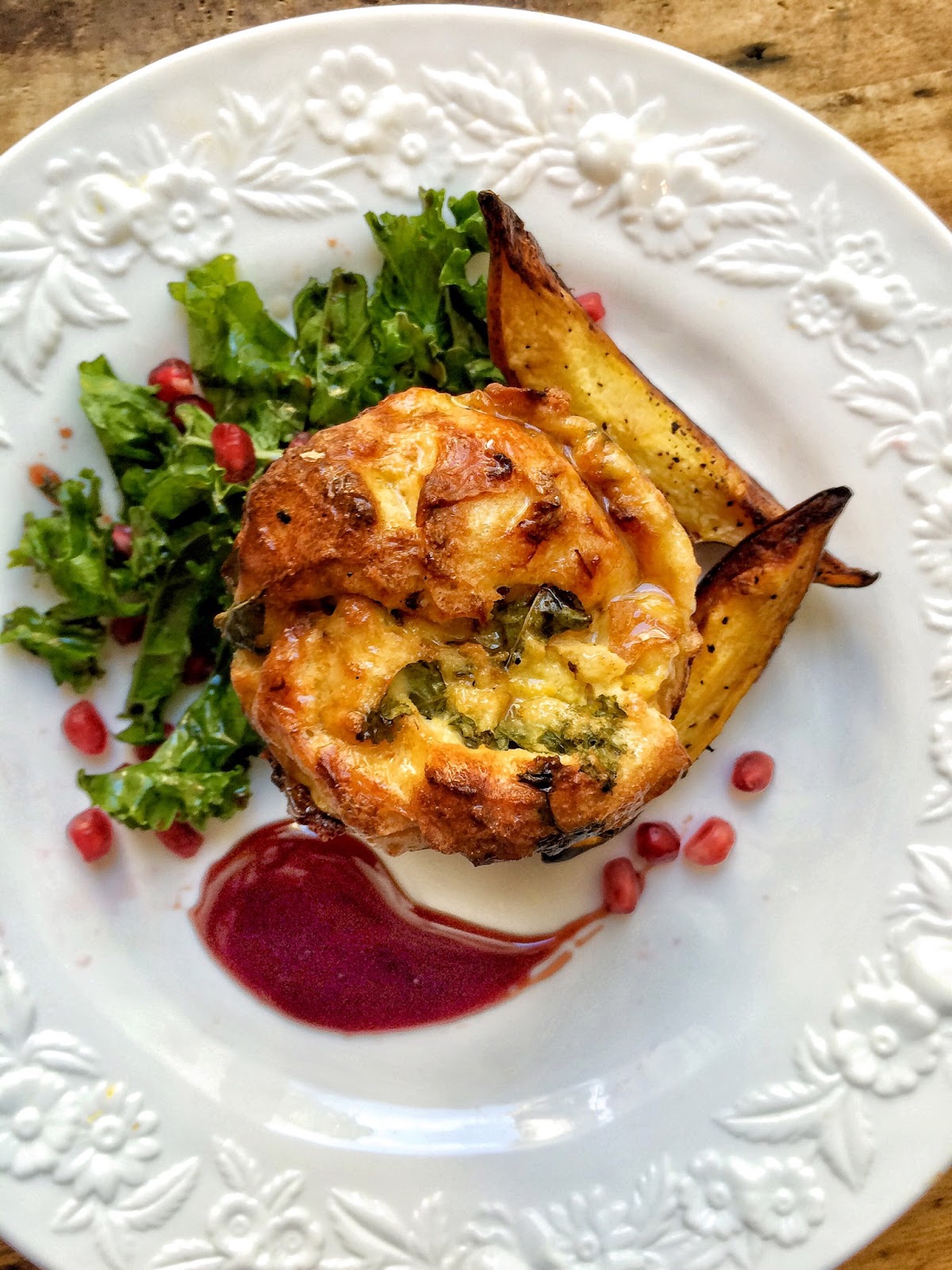
When the squash was cool enough to handle, I slipped off the skins and chopped the softened flesh into 1/2" ragged pieces. After folding the sauteed kale into the pudding mix, I added the chopped squash and 1 cup grated gruyere cheese before ladling the bread pudding into buttered muffin tins (12 muffins) and sliding them into a preheated 375 degree oven. When they puffed up and browned around the edges (about 35 minutes), I pulled them from the oven, ran a sharp knife around the edges to release them from the tins, and brushed the tops with melted unsalted butter.

Still warm and dripping with butter, I nestled the bread puddings onto chopped  baby kale splashed with a lemony vinaigrette before finishing with crunchy pomegranate seeds and a sweet/tart pomegranate  gastrique.

Roasted acorn squash bread pudding.


Fresh.
Perky.
Comforting.

Brown sugar not included.


Sunday, October 30, 2016

Dancing To The Beet.

Hey, over here. I'm over here. Way over here.  I'm the beet loving beet-stained guy dancing on the other side of the invisible line separating beet lovers and haters.  Come on over. Cross the line. It's mighty fine in beet land.

Red. Purple. Golden. White. Candy-striped.
Hidden beneath dirt-caked skins, beets are nature's jewels that radiate deep earthy sweetness. Polarizing to a fault, they bewilder and beguile. I'm beguiled.

Roasted Beet and Goat Cheese Terrine.
Layered and pressed in a terrine, the creamy tang of whipped goat cheese brightens the roasted sweet earthiness of thinly sliced red and golden beets

Beet it.
After washing and trimming 1 pound each red and golden beets, I rubbed the beets with olive oil, seasoned them with salt and pepper,  placed them into separate  aluminum foil packets, added a splash of water to each packet to create steam, sealed the packets, and slid the beets into a preheated 375 degree oven.

When the beets were knife tender, about 50 minutes, I pulled them from the oven, opened the foil to release the heat, and let them rest until they were completely cooled.

When the beets were cool enough to handle, I used paper towels (and gloves) to gently slip the skins from the beets and used a mandolin to slice them into uniform 1/8" cuts.

Whip it.
I brought 10 ounces goat cheese to room temperature, added 3 ounces room temperature cream cheese, 1 tablespoon lemon juice, and 1 teaspoon ground white pepper before using a hand mixer to whip the goat cheese into a creamy spread.

After spraying a  bread tin with cooking spray, I lined the pan with plastic wrap, leaving a 6" overhang on all sides.

I layered the golden beets in double overlapping layers on the bottom of the pan, piped a zig zag flurry of creamed goat cheese onto the beets, drizzled olive oil over the beets, seasoned them with salt and pepper, and repeated the process using alternating layers of golden beets, red beets, and goat cheese.

After gently pressing the beets into the bread tin, I pulled the plastic wrap over the top to seal the terrine, nestled a piece of cardboard trimmed to fit within the sides of the tin, topped the terrine with 2 heavy cans, and slid the terrine into the refrigerator to chill overnight.

With the terrine thoroughly chilled and compressed, I pulled the beet terrine from the refrigerator, removed the plastic wrap, and used a very sharp knife to slice the beets into 3/4" pieces. After trimming the sides for clean edges, I finished with olive oil, flaked sea salt, shelled pistachios, and fresh basil.

Earthy.
Sweet.
Tangy.
Fresh.

Fabulous.


Tuesday, October 18, 2016

Lacquered Up

Michael and I spent our first few Thanksgivings traveling to Washington D.C. for long holiday weekends. Having lived in and around Washington as a kid, the trips felt somewhat like secret homecomings. Back in the day, we had little money, so we made the trips in my beaten up '77 white Granada. As it's been throughout our years together, the journeys were as important as the destination. The visceral memory of our drives through the Shenandoah Valley on gray mid-November days still dance in my head as reminders of simpler times. Cradled by the monotonous rhythm of the road, houses tucked into sweeping meadows slowly passed by our speeding windows. Even from a distance, with car-stuffed driveways and smoke poofs drifting from their chimneys, the houses looked happy. All those thanksgiving families gathered together in all those passing farm houses. Quiet moving postcards.

Over the river and through the woods.
Family homesteads. Family farms.
Grandmother's house.
After abandoning our boyish follies, Michael and I spent the next thirty years traveling over the river and through the woods to share our family holiday gatherings. Separated by hundreds of miles, our families brought vastly different things to the party. Different styles of turkey. Different sides. Different traditions. Time honored on both ends, they were always warm, comforting, and deeply familiar. We held fast until time slowly took its toll.

Nowadays, there are no more rivers and woods. Embracing the mishmash of our combined Thanksgiving traditions, we found our way home. Michael has to have his stuff and I have to have mine. You know, the non-negotiables. We're one dish away from needing a revolving lazy susan to navigate the sides. Win!  And the turkey? No rules. Fair game. Boom.

Cider Brined Lacquered Turkey.
It's coming on Thanksgiving. Pour the bourbon and dress up the turkey.

Brine.
Even a mild brine plumps a bird with moisture and flavor. Bolstered by the abundance of local apple cider, I got apple happy.

After warming 14 cups Evans Orchard apple cider in a large stock pot over a medium flame, I added 1 1/2 cups  Country Rock sorghum, 1 1/2 cups Buffalo Trace bourbon, 6 cups water, 3 tablespoons black peppercorns, 3 bay leaves, 6 whole garlic cloves,, 4 sprigs lemon thyme, and 1 cup kosher salt. When the sugar thoroughly dissolved into the mix, I pulled the brine from the heat and added 6 cups of ice to cool the brine to room temperature.

I lined a clean bucket with a large plastic bag and carefully poured the cooled brine into the bag.  After thoroughly rinsing a 12 pound all natural Amish turkey, I plunged it into the brine, placed a plate over the turkey to keep it submerged, tied the plastic bag together, and slid the turkey into the refrigerator to brine for 24 hours.

Roast.
So, here's the deal. I needed a shallow pan to allow the legs and thighs of the turkey to be exposed to as much circulating heat as possible, so I used a shallow (2" deep) hotel pan. It was deep enough to hold the needed vegetables and liquid, but shallow enough for even heat distribution.

I pulled the turkey from refrigerator, disposed of the brine, rinsed the turkey under cold running water, patted it dry, and set it aside. For an added flavor boost, I combined 2 sticks softened unsalted butter, 1 tablespoon minced fresh sage, 1 tablespoon minced fresh rosemary, 2 tablespoons chopped thyme, and 2 tablespoons chopped fresh parsley before smearing it over the entire turkey. Using the tips of my fingers to loosen the skin from the flesh, I carefully slathered the remaining herbed butter under the skin of the breasts, thighs, and legs. After stuffing the cavity with sliced apples, onions, rosemary, sage, and thyme, I tied the legs together with kitchen twine.

In lieu of a rack, I placed celery stalks and large unpeeled carrots into the hotel pan and positioned the buttered turkey onto the vegetables before scattering 6 whole garlic cloves, 3 quartered Scott County red candy onions, and  4 peeled Casey County Winesap apples to the side. After adding 2 cups chicken stock, 1 cup apple cider, and 1 cup bourbon to the pan, I slid the turkey into a preheated 350 oven.

To baste or not to baste? I'm a baster. As long as the turkey is cooked to the correct temperature ( internal temp 165 deepest part of the thigh), why not bath the skin with the reduced fatty pan drippings?  Basting the turkey roughly every 30 minutes,  I covered the breast with aluminum foil after 1 hour to prevent over browning and continued to baste while checking the internal temperature every 45 minutes or so.


Glaze.
I'm a sucker for a glaze.
It's all about balance.
After reducing 2 cups apple cider by half, I added 3/4 cups sorghum, 3 tablespoons soy sauce, 1/2 cup bourbon, 1/4 cup apple cider vinegar, and 1/4 cup brown sugar. I lowered the heat and let the glaze bubble away until it was the consistency of...well...sorghum. So, think of it as an amplified  boozy apple cider-infused sweet and tart version of sorghum.


Lacquer.
When the turkey reached an internal temperature of 155 degrees (about 2 hours), I started painting every inch of the exposed skin and flesh with the molten sticky glaze.  When the turkey hit 165 degrees, I blasted to heat to 450 degrees, gave the bird a final slather, and popped it back into the oven to burnish the skin before pulling the turkey from the oven to rest for 30 minutes.

After reducing the strained pan drippings into a highly seasoned jus, I nestled the brushed mahogany lacquered turkey onto  fresh greenery, feathered sage, and fresh bay leaves.

Full on savory, the apple cider and sorghum didn't blast the turkey into a candied sugar bomb. The bold double punch of  brine and glaze combined to promote succulent, moist, and tender meat. While the bourbon added mellow smoky vanilla undertones, the acidic bolt of the apple cider vinegar tempered the fruity cider and soft bittersweet earthiness of the caramelized sorghum. Perfect.

Thanksgiving.
Lacquered up.